Many factories no longer run a single-brand production line. A CNC machine may use a FANUC control system, while nearby automation equipment relies on Siemens PLC modules, Mitsubishi servo drives, ABB inverters, Omron control components, older HMI panels, power supplies or I/O modules.
When everything is running, this mix may not feel like a problem. The difficulty appears when one machine stops. Maintenance teams usually start from the machine: which line is affected, which component is suspected, whether a similar repair happened before, and whether anyone has confirmed a source for that model.
Organize by Machine Location First
Brand folders are useful, but the maintenance site looks at the problem from another angle. The team needs to know where the machine is, how downtime affects the line, whether a similar part was replaced before, and whether a supply channel has already been checked.
For a key CNC machine, the control system, servo drive, spindle amplifier, power module, I/O module, HMI and commonly replaced boards should all be linked back to that machine. When the equipment alarms, engineers and buyers can work from the machine record instead of searching through old emails, phone photos and supplier messages.
Identify Production-Critical Parts
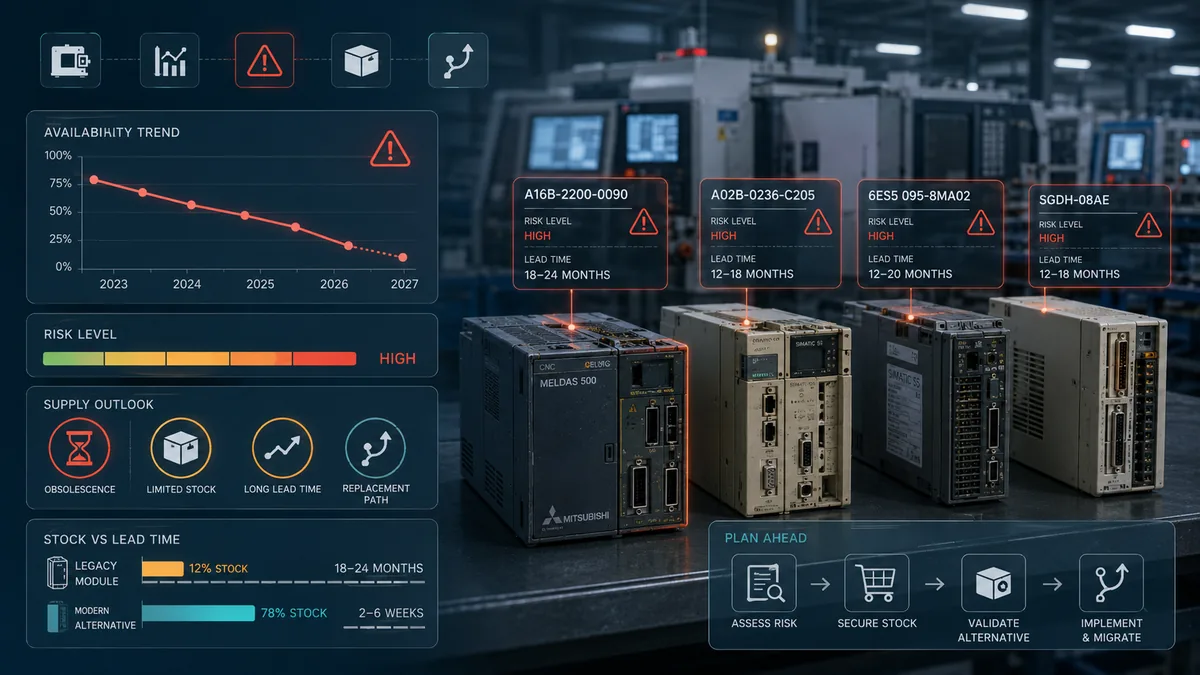
The more brands a plant uses, the more model numbers it has to manage. Not every part deserves the same level of attention. Some items affect only an auxiliary device; others can stop an entire line. Some parts are low cost but have unstable supply or long lead time.
FANUC servo amplifiers, Siemens PLC modules, Mitsubishi servo drives, ABB inverters, power modules and key circuit boards on a main production line usually deserve earlier attention than low-value consumables. This topic continues in Which Key Parts Should Be Recorded First on Multi-Brand CNC Equipment.
Keep Repair History Connected
A model number or photo is helpful, but it is often not enough. If the record does not show the machine position, fault symptom, previous repair history or product condition, the next decision can still be slow.
The same drive model can have a different impact depending on whether it is installed on a spindle or an auxiliary axis. If the unit has been repaired before, or if fans, capacitors or power modules were replaced, that history can affect repair judgment and purchasing decisions.
Mark Old Models Early
Another common issue is that a machine still produces well, but some automation components inside it are older models. Once the part fails, the plant may discover that the original item has been discontinued, local stock is unavailable, or market stock condition is unclear.
Older equipment can continue to create value, but the supply risk of its key parts should be known in advance. Factories should understand which models are still available, which are mainly stock items, and which may require used, repaired or refurbished options. See Obsolete Spare Parts Risk in Legacy CNC Equipment for the legacy-equipment side of this issue.
Make Repair Sourcing Faster
The value of multi-brand spare parts management is not in making records complicated. Its value is helping maintenance and purchasing teams communicate faster when equipment fails. If the site team already knows the location and repair history of the suspected component, they do not need to spend extra time opening the cabinet only to find the nameplate.
If one production line includes FANUC, Siemens, Mitsubishi, ABB, Omron and other brands, spare parts management should be organized around equipment importance, failure impact, lead-time risk and supply channels. Related details continue in What Information Should a FANUC, Siemens, and Mitsubishi Spare Parts List Include.
Frequently Asked Questions
Should we organize spare parts by brand or by machine?
Start with machine location and production impact. Brand folders are useful for searching, but maintenance teams need to find parts by equipment first. A FANUC part on the main machining center is more critical than the same part on a backup unit.
How many spare parts should we keep in stock?
You do not need to stock everything. Identify the parts that would cause the longest downtime if they failed, then check lead times and market availability for those models first. Stocking decisions follow from that information.
What if we do not have the full model number?
Take a clear photo of the nameplate showing the model, voltage, capacity and serial number. Even if you cannot read every character, a good nameplate photo gives suppliers a much better starting point than a guess.
How do we handle parts from brands we no longer use regularly?
Check the supply situation before the part fails. Some older models from FANUC, Siemens, Mitsubishi and ABB are still available through stock or refurbished channels. Others may need repair as the fallback option. Flag these risks early so the team is not caught off guard during a breakdown.
External References
ISA-95 / IEC 62264, IBM MRO spares criticality, NIST asset condition management, and IEC 62402:2019.